Algorithms Matching Free Bet Incentives to Live Fluctuations in Football and Thoroughbred Markets
Kai Lange · Aug 25, 2026

Algorithms Matching Free Bet Incentives to Live Fluctuations in Football and Thoroughbred Markets
Bookmakers deploy algorithmic frameworks that scan live event data streams and pair available free bet credits with shifting market conditions in football and equine competitions, and these systems process variables such as goal probabilities, horse positioning updates, and real-time odds movements to determine optimal incentive deployment windows. Data from industry monitoring groups shows that such matching occurs within milliseconds of each new event trigger, allowing operators to release or withhold promotional credits based on current liquidity levels across both sports.
Core Components of Algorithmic Matching Frameworks
Systems integrate multiple data feeds that include player tracking sensors on football pitches, sectional timing devices along racecourses, and aggregated betting volumes from exchange platforms, while the algorithms weigh these inputs against historical performance models to calculate when a free bet offer will produce balanced risk exposure. Observers note that football markets often generate high-frequency updates during set pieces and counterattacks, whereas equine events produce steadier streams tied to stride patterns and pace changes, and the matching logic adjusts thresholds accordingly to avoid overexposure during volatile segments.
Engineers configure weighting parameters that prioritize factors such as remaining match time in football or furlongs left in a race, and these parameters shift automatically when live data deviates from pre-event baselines by predetermined margins. Research from academic institutions indicates that this adaptive weighting reduces instances where free bets land on markets already saturated by sharp money, thereby preserving promotional budgets across longer sessions.
Application in Football Live Markets
During Premier League fixtures, algorithms monitor corner counts, shot accuracy percentages, and substitution announcements to decide whether to surface a free bet on next-goal markets or on player-specific props, and they often trigger offers immediately after a red card alters the expected goal differential. Operators have documented cases where such timing coincides with brief windows of reduced bookmaker margins, allowing the free bet to absorb a portion of the volume without eroding overall hold percentages.
Systems also track cross-market correlations, such as the relationship between total goals and Asian handicap lines, and they route incentives toward the less liquid side of the spread to maintain equilibrium. Figures from European regulatory filings reveal that August 2026 saw increased deployment of these correlation rules during international tournament qualifiers, where goal-scoring patterns differ markedly from domestic league averages.
Integration with Equine Event Dynamics
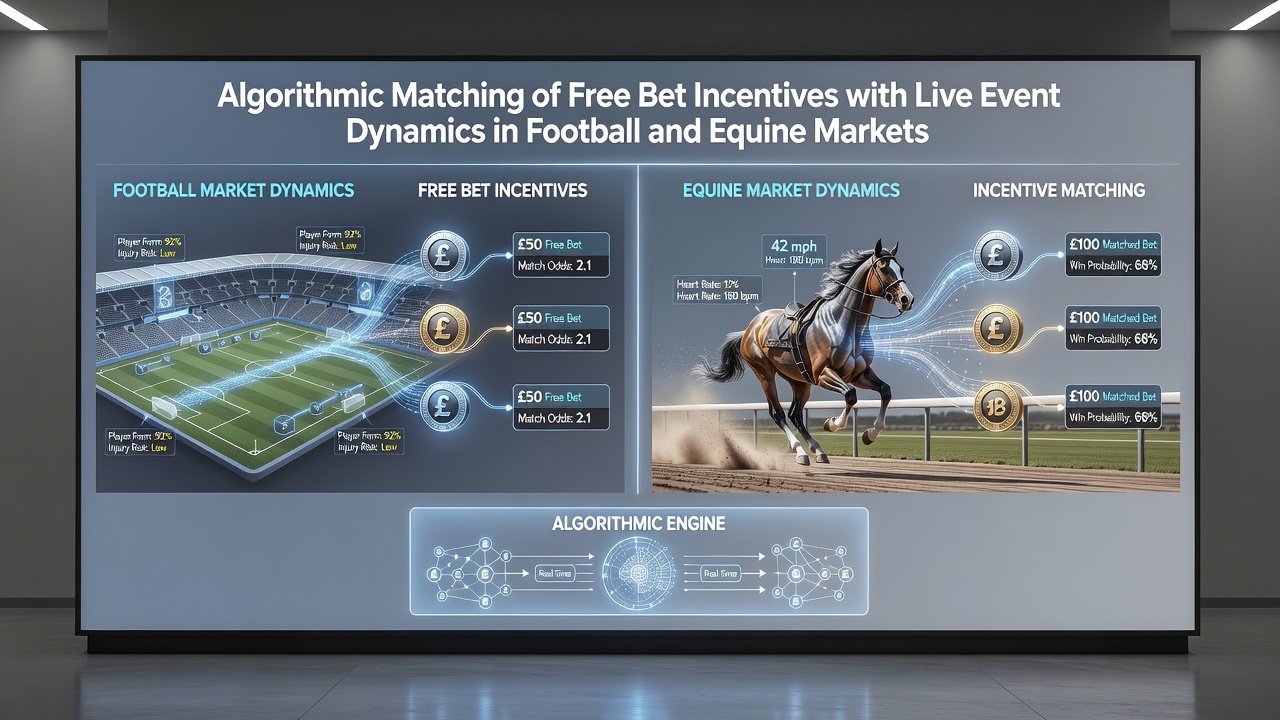
Equine platforms feed algorithms with real-time pace figures, going reports, and trainer comments broadcast via official channels, and the software then matches free bet credits to each-way or place markets when a horse drifts beyond a calculated threshold. Those who have examined the code note that sectional data from the final two furlongs carries heavier weight than earlier splits, because late surges or fades produce the sharpest odds movements and therefore the clearest opportunities for incentive alignment.
Multiple operators link their free bet engines to steward inquiry flags and non-runner notifications, which automatically pause or redirect offers until the field stabilizes. According to reports compiled by the European Gaming and Betting Association, equine markets in 2026 experienced a measurable uptick in algorithmic free bet usage during summer festival meetings, where field sizes and weather variables create additional layers of live adjustment.
Regulatory Context and Data Handling
Authorities in several jurisdictions require operators to maintain audit trails that log every algorithmic decision linking a free bet to a live trigger, and these logs must demonstrate that promotional releases do not target vulnerable account segments identified through separate responsible gambling modules. Canadian provincial regulators, for example, have published guidance that emphasizes transparency in how live-event algorithms interact with bonus wagering requirements, and similar standards appear in Australian state frameworks covering both sports and racing products.
Operators must also ensure that the same matching logic applies uniformly across customer segments so that geographic or demographic biases do not emerge in the distribution of free bet opportunities. Data aggregated by the Australian Communications and Media Authority shows steady growth in the proportion of in-play free bets activated through algorithmic routes, with football and equine categories accounting for the largest share of automated releases during peak summer months.
Conclusion
Algorithmic systems continue to refine the timing and placement of free bet incentives by processing continuous streams of football and equine live data, and the resulting frameworks allow operators to maintain market balance while meeting promotional objectives. Continued development in sensor technology and predictive modeling will likely expand the range of variables these algorithms can incorporate, yet the core requirement remains consistent documentation and equitable application across all user accounts.