Shifts in university demographics fuel rising per-user expenditure on integrated sports and racing platforms amid self-exclusion tool adoption
Quinn Simon · Jul 21, 2026
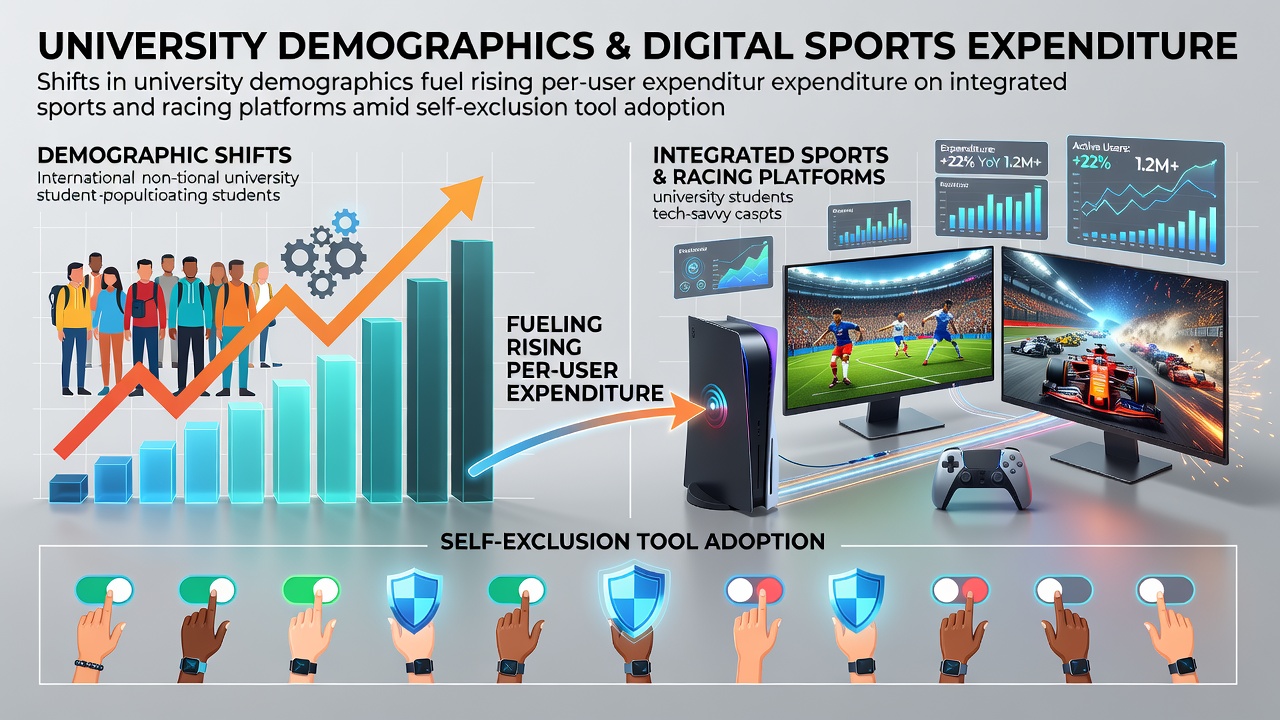
Shifts in university demographics fuel rising per-user expenditure on integrated sports and racing platforms amid self-exclusion tool adoption
University populations across multiple regions have undergone notable demographic transformations in recent years, and these changes coincide with measurable increases in per-user spending on platforms that combine sports betting with horse racing options. Data from enrollment records show rising proportions of international students alongside shifts in age distributions and socioeconomic backgrounds within student cohorts, patterns that researchers link to altered engagement levels with betting services.
Demographic Changes Reshape User Profiles
Enrollment figures from higher education institutions indicate that international student numbers have climbed steadily since 2023, with many arriving from countries where integrated betting applications already hold strong market presence. Observers note that these students often arrive with established habits around mobile platforms offering combined football markets and thoroughbred racing features, which contributes to higher average transaction values per account. At the same time, domestic student bodies include growing shares of mature learners and part-time attendees whose disposable income patterns differ from traditional cohorts.
Research from the Australian Gambling Research Centre highlights how such demographic mixing correlates with elevated per-user expenditure metrics on multi-sport and racing ecosystems. The report examines transaction data across several jurisdictions and finds that accounts associated with university-aged users demonstrate consistent growth in average monthly outlays even when total active accounts remain flat or decline slightly.
Expenditure Trends on Integrated Platforms
Platform operators report that integrated interfaces allowing seamless transitions between live sports events and racing schedules attract sustained activity from users fitting updated demographic profiles. Figures compiled through industry monitoring services reveal that per-user revenue from these combined offerings rose by double-digit percentages in key markets between 2024 and 2026, driven by features such as real-time odds updates and cross-product promotions.
Analysts tracking transaction flows point to increased participation in accumulator-style wagers that span both football and racing categories as one factor behind the spending uptick. Students with access to mobile-first applications appear particularly responsive to these bundled options, resulting in longer session durations and higher cumulative stakes per individual.
Self-Exclusion Tools and Their Interaction With Spending Patterns
Adoption rates for voluntary self-exclusion mechanisms have increased among university populations, yet available data suggest that overall per-user expenditure continues its upward trajectory. Regulatory filings from Canadian provincial gaming authorities document rising registrations in exclusion programs while simultaneously recording elevated average deposits among remaining active accounts in overlapping age brackets.

Studies conducted by academic teams at North American universities examine how exclusion tools function within changing demographic contexts. These investigations track account activity before and after exclusion periods, revealing that returning users frequently resume at spending levels equal to or exceeding prior baselines. The pattern holds across platforms that integrate sports and racing products, indicating that demographic factors may exert stronger influence on expenditure than exclusion mechanisms alone.
July 2026 updates from European monitoring consortia further illustrate this dynamic, with participating institutions reporting that self-exclusion uptake among students has accelerated while aggregate per-user metrics on combined platforms maintain their growth curve. Cross-referenced enrollment statistics suggest that incoming cohorts bring different risk tolerance profiles shaped by prior exposure to betting environments in their home regions.
Platform Features Driving Engagement
Operators have expanded functionality on integrated applications to accommodate diverse user preferences observed within university settings. Options for custom bet construction that link player performance metrics with racing outcomes receive particular attention from users whose demographic characteristics align with recent enrollment trends. Transaction logs indicate these features correlate with higher individual spend rates compared to single-category betting interfaces.
Payment integration methods tailored to student banking habits, including instant transfer options tied to campus debit arrangements, also appear in operational reports as contributors to sustained activity levels. These technical adjustments coincide with the documented rise in per-user expenditure even as self-exclusion registrations grow.
Conclusion
Demographic evolution within university populations continues to intersect with spending behaviors on platforms merging sports and racing betting products. Available statistics from multiple regulatory and research bodies demonstrate rising per-user expenditure alongside increased self-exclusion tool usage. The interplay between these elements reflects broader enrollment patterns and platform adaptations rather than isolated behavioral shifts. Continued monitoring through academic and governmental channels will clarify how these trends develop through subsequent academic cycles.