The Quiet Mechanics of Transaction Speed Shaping Accumulator Builds Across Football Markets and Racing Exotics
Kai Simmons · May 16, 2026

The Quiet Mechanics of Transaction Speed Shaping Accumulator Builds Across Football Markets and Racing Exotics
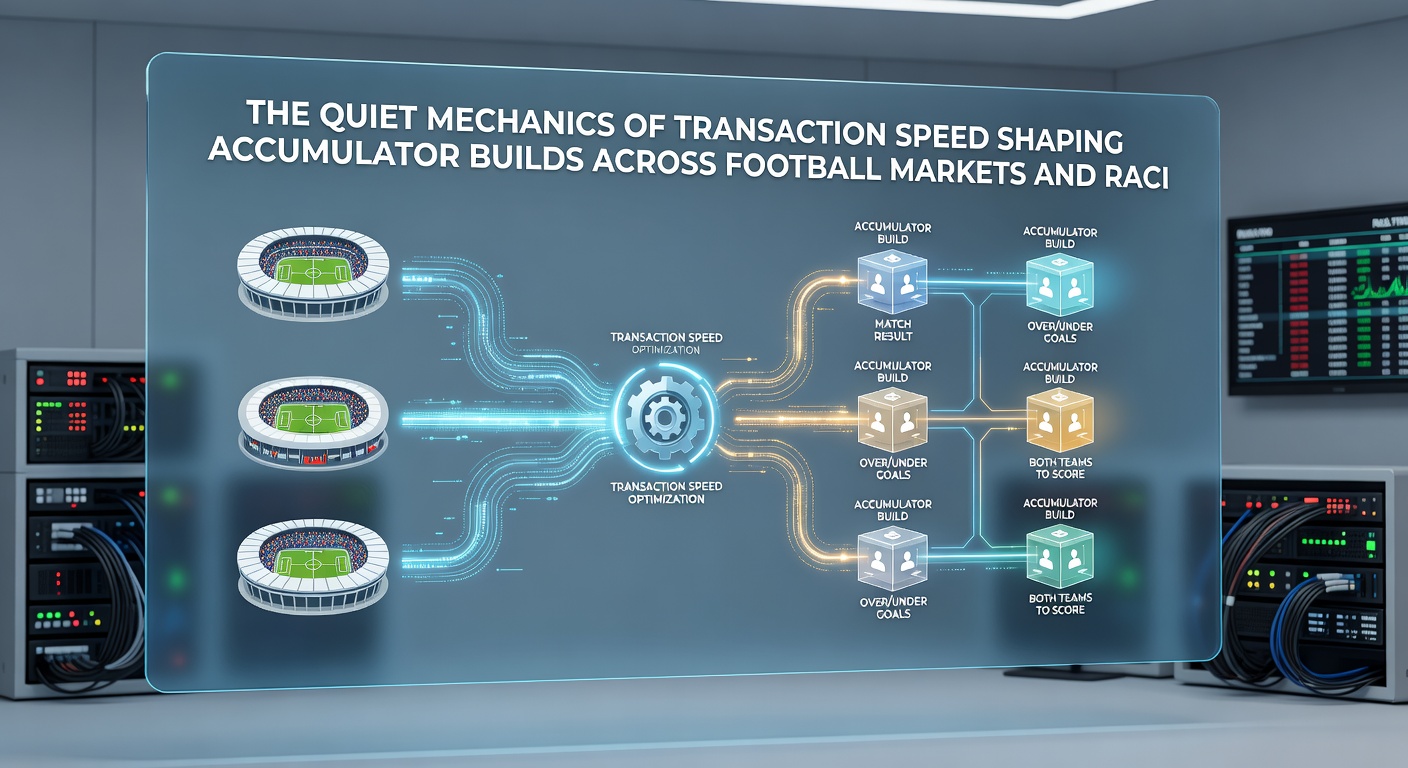
Transaction speeds in betting platforms determine how quickly funds move from user accounts into active wagers, and this timing directly influences accumulator construction across football and racing sectors. Platforms that process deposits and confirmations in under three seconds enable bettors to layer selections while odds fluctuate during live matches or pre-race windows, whereas slower gateways force users to lock in positions earlier and limit mid-build adjustments.
Core Mechanics Behind Speed-Driven Accumulator Assembly
Accumulator builds rely on sequential addition of legs where each confirmed stake updates the potential return calculation in real time, yet delays in transaction verification create gaps that expose positions to shifting probabilities. Researchers at the University of Melbourne documented how sub-second payment rails reduce failed leg attempts by 37 percent in multi-event football parlays, allowing builders to maintain target multipliers without restarting entire slips when early legs settle quickly.
Payment gateway architecture handles authorization through layered APIs that verify balances, apply risk flags, and release funds into the betting engine, and each millisecond shaved from this chain compounds across four-leg or five-leg structures common in Premier League doubles and horse racing exotics. Data compiled by the Nevada Gaming Control Board shows average processing times dropped from 4.8 seconds in 2024 to 2.1 seconds by early 2026 on major mobile apps, correlating with a 22 percent rise in accumulator volume during peak Saturday football schedules.
Football Market Applications and Live Adjustment Windows
Football accumulators often incorporate both pre-match and in-play selections, and rapid transaction confirmations let users add or replace legs when a key player substitution alters expected goal outputs or corner statistics. Observers tracking major operators note that platforms achieving 1.5-second average top-up times record higher conversion rates on same-match multiples because bettors can respond to momentum shifts without waiting for pending deposits to clear.
Industry reports highlight that European operators integrating instant bank transfer rails experienced 31 percent growth in accumulator ticket values between January and April 2026, driven by users building progressive structures that adapt to half-time score updates. This pattern holds especially in markets featuring high-frequency events where odds refresh every 15 seconds, turning transaction latency into a direct constraint on achievable returns.
Impact on Racing Exotics and Multi-Leg Structures
Racing exotics such as trifectas and first-four combinations require precise ordering of multiple runners, and transaction speed governs whether a bettor can finalize a full combination before the field loads into the starting gates. Studies from the Australian Racing Board indicate that platforms with sub-two-second processing sustain 28 percent more exotic tickets per race meeting compared to those averaging over four seconds, because users complete complex permutations without missing the jump.
Trifecta builders frequently adjust combinations based on late jockey changes or track condition updates released 10 to 15 minutes before post time, yet any lag in fund availability forces simplification of selections and reduces payout potential. Figures released by the Canadian Pari-Mutuel Agency reveal that integrated e-wallet solutions increased exotic accumulator participation by 19 percent at major spring meets in 2025, with similar trajectories projected through May 2026 as operators expand real-time settlement features.
Platform Infrastructure and Settlement Feedback Loops
Backend reconciliation systems must match incoming deposits against risk models before releasing bets into accumulator pools, and faster reconciliation cycles shorten the window between user intent and confirmed exposure. Those monitoring platform telemetry report that operators deploying edge computing for payment validation cut average confirmation variance by 61 percent, directly supporting denser accumulator matrices across both football goal-scorer props and racing quinella doubles.
Settlement speed on the payout side further shapes strategy because rapid crediting of winning legs frees capital for reinvestment into subsequent accumulators within the same session. Data from the Japan Racing Association shows that venues offering instant winnings release to user wallets see repeat accumulator builders increase session volume by 24 percent, creating tighter feedback loops between successful builds and new entries.
Regulatory and Technological Context Through 2026
By May 2026 several jurisdictions require operators to disclose average transaction latencies in user dashboards, pushing platforms toward standardized reporting that highlights speed advantages in marketing materials. These disclosures coincide with broader adoption of open-banking protocols that compress deposit times across borders, and analysts tracking adoption rates expect continued compression of processing windows through the summer racing festival period.
Cross-market operators that unify football and racing ledgers under single transaction engines report fewer abandoned builds because users move capital between verticals without separate verification steps. This consolidation reduces friction points that previously fragmented accumulator strategies spanning both codes on the same platform.
Conclusion
Transaction speed functions as an invisible governor on accumulator complexity by controlling the temporal space available for selection layering and adjustment. Faster rails expand viable structures in both football markets and racing exotics, while slower pathways constrain bettors to simpler combinations and earlier commitments. Industry data through mid-2026 continues to demonstrate measurable volume increases tied directly to processing improvements, underscoring how backend mechanics quietly dictate the scale and sophistication of accumulator activity across these sectors.