Tracing Algorithmic Edges: How Data Models Refine Multi-Sport Parlay Structures Through Instant Transaction Layers on Portable Interfaces
Quinn Simon · Jul 14, 2026

Tracing Algorithmic Edges in Parlay Refinement
Data models now process multi-sport parlay structures by identifying statistical correlations across events that span different leagues and disciplines. These models draw on historical performance metrics, live probability feeds, and transaction velocity records to adjust stake allocations in real time. Operators deploy them on portable interfaces where users select combinations from football, basketball, tennis, and horse racing within a single ticket. **Core Components of the Models**
Machine learning frameworks evaluate variance across legs and recalibrate implied probabilities before final confirmation. The process incorporates edge detection routines that flag discrepancies between bookmaker odds and aggregated external data sources. When a model detects favorable misalignments, it suggests weight adjustments that maintain overall ticket viability while optimizing expected value. Portable interfaces transmit these adjustments through layered application programming interfaces that handle instant deposits and confirmations. Transaction layers operate with sub-second latency, allowing the system to lock in selections before odds shift further. This integration reduces exposure windows that previously existed between bet placement and settlement. **Transaction Layer Mechanics**
Instant transaction layers rely on tokenized payment rails embedded directly in mobile applications. These rails connect to banking networks and digital wallets simultaneously, executing authorization and ledger updates in parallel. Data models monitor these flows to ensure that parlay structures remain solvent even when individual legs resolve sequentially across time zones. In July 2026 several platforms expanded their application programming interface documentation to include predictive settlement estimates generated by the same models. The estimates draw from pattern recognition across millions of completed parlays and feed back into the refinement loop for subsequent user sessions. Observers note that this closed-loop approach has become standard among operators handling high-volume multi-sport tickets. **Geographic Implementation Patterns**
North American operators integrate these systems under frameworks established by state gaming authorities, while Australian providers align with digital transaction standards set by the Australian Communications and Media Authority. European implementations frequently reference cross-border payment directives that emphasize speed and auditability. Each region adapts the core data model architecture to local regulatory reporting requirements without altering the fundamental correlation engines. **User Interface Adaptations**
Mobile interfaces present parlay builders that update dynamically as selections accumulate. Color-coded indicators reflect model-generated confidence intervals for the entire structure rather than isolated legs. Users receive prompts when adding a leg would dilute the calculated edge below a configurable threshold, prompting either removal or stake modification. Research from the University of Nevada Reno's gaming analytics program has documented how these interface cues influence ticket construction patterns across large user cohorts. The study tracked changes in average parlay size and leg diversity following the introduction of real-time model feedback. Findings showed measurable shifts toward combinations with higher statistical independence between events. 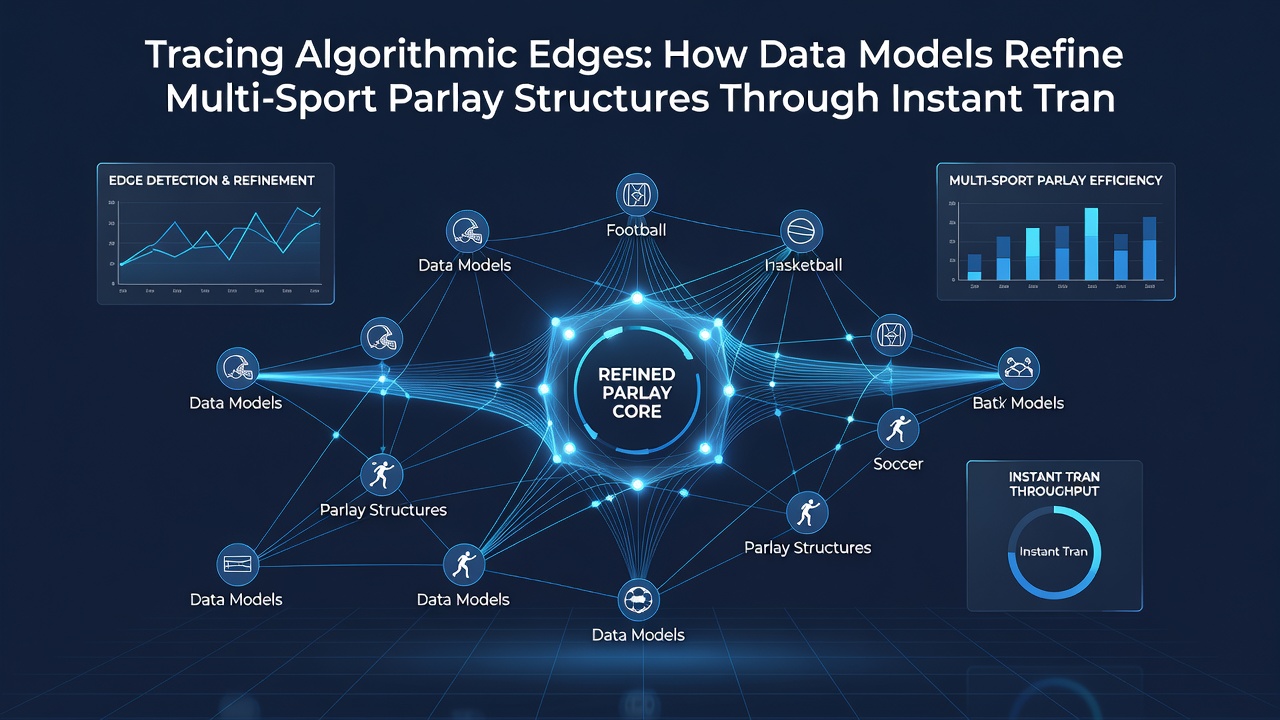 **Data Input Sources and Validation**
Models ingest structured feeds from official league statistics services, weather services for outdoor events, and injury tracking databases. Validation occurs through back-testing against archived ticket outcomes, with periodic recalibration of weighting factors. Transaction layer logs supply additional inputs by revealing patterns in deposit timing relative to event starts. Canadian regulators require periodic third-party audits of these input pipelines to verify data integrity. Similar oversight mechanisms exist in several Asian markets where mobile betting volumes have grown rapidly. The audits focus on reproducibility of model outputs rather than prescriptive limits on algorithmic complexity. **Operational Scale and Reporting**
Industry reports compiled by the American Gaming Association indicate that multi-sport parlay volume processed through mobile channels has increased steadily since 2023. Association data shows consistent growth in average ticket complexity measured by number of legs and sport diversity. Transaction layer throughput statistics accompany these figures, highlighting reduced failure rates during peak event windows. Operators publish aggregate performance metrics that separate model-driven refinements from baseline offerings. These disclosures appear in quarterly operational summaries and regulatory filings, providing transparency without exposing proprietary weighting schemes. **Future Integration Pathways**
Developers continue to explore graph neural network architectures that treat each sport as a node within a larger dependency graph. Early deployments suggest improved detection of cross-sport arbitrage opportunities when combined with existing transaction layers. Portable devices remain the primary delivery mechanism because of their continuous connectivity and sensor data that can inform contextual risk adjustments. Conclusion
The convergence of refined data models and instant mobile transaction layers has produced measurable changes in how multi-sport parlay structures are constructed and settled. These systems operate across multiple regulatory environments while maintaining consistent core logic. Continued evolution depends on the quality and timeliness of input data streams together with the reliability of the underlying payment infrastructure.
**Data Input Sources and Validation**
Models ingest structured feeds from official league statistics services, weather services for outdoor events, and injury tracking databases. Validation occurs through back-testing against archived ticket outcomes, with periodic recalibration of weighting factors. Transaction layer logs supply additional inputs by revealing patterns in deposit timing relative to event starts. Canadian regulators require periodic third-party audits of these input pipelines to verify data integrity. Similar oversight mechanisms exist in several Asian markets where mobile betting volumes have grown rapidly. The audits focus on reproducibility of model outputs rather than prescriptive limits on algorithmic complexity. **Operational Scale and Reporting**
Industry reports compiled by the American Gaming Association indicate that multi-sport parlay volume processed through mobile channels has increased steadily since 2023. Association data shows consistent growth in average ticket complexity measured by number of legs and sport diversity. Transaction layer throughput statistics accompany these figures, highlighting reduced failure rates during peak event windows. Operators publish aggregate performance metrics that separate model-driven refinements from baseline offerings. These disclosures appear in quarterly operational summaries and regulatory filings, providing transparency without exposing proprietary weighting schemes. **Future Integration Pathways**
Developers continue to explore graph neural network architectures that treat each sport as a node within a larger dependency graph. Early deployments suggest improved detection of cross-sport arbitrage opportunities when combined with existing transaction layers. Portable devices remain the primary delivery mechanism because of their continuous connectivity and sensor data that can inform contextual risk adjustments. Conclusion
The convergence of refined data models and instant mobile transaction layers has produced measurable changes in how multi-sport parlay structures are constructed and settled. These systems operate across multiple regulatory environments while maintaining consistent core logic. Continued evolution depends on the quality and timeliness of input data streams together with the reliability of the underlying payment infrastructure.
Data models now process multi-sport parlay structures by identifying statistical correlations across events that span different leagues and disciplines. These models draw on historical performance metrics, live probability feeds, and transaction velocity records to adjust stake allocations in real time. Operators deploy them on portable interfaces where users select combinations from football, basketball, tennis, and horse racing within a single ticket. **Core Components of the Models**
Machine learning frameworks evaluate variance across legs and recalibrate implied probabilities before final confirmation. The process incorporates edge detection routines that flag discrepancies between bookmaker odds and aggregated external data sources. When a model detects favorable misalignments, it suggests weight adjustments that maintain overall ticket viability while optimizing expected value. Portable interfaces transmit these adjustments through layered application programming interfaces that handle instant deposits and confirmations. Transaction layers operate with sub-second latency, allowing the system to lock in selections before odds shift further. This integration reduces exposure windows that previously existed between bet placement and settlement. **Transaction Layer Mechanics**
Instant transaction layers rely on tokenized payment rails embedded directly in mobile applications. These rails connect to banking networks and digital wallets simultaneously, executing authorization and ledger updates in parallel. Data models monitor these flows to ensure that parlay structures remain solvent even when individual legs resolve sequentially across time zones. In July 2026 several platforms expanded their application programming interface documentation to include predictive settlement estimates generated by the same models. The estimates draw from pattern recognition across millions of completed parlays and feed back into the refinement loop for subsequent user sessions. Observers note that this closed-loop approach has become standard among operators handling high-volume multi-sport tickets. **Geographic Implementation Patterns**
North American operators integrate these systems under frameworks established by state gaming authorities, while Australian providers align with digital transaction standards set by the Australian Communications and Media Authority. European implementations frequently reference cross-border payment directives that emphasize speed and auditability. Each region adapts the core data model architecture to local regulatory reporting requirements without altering the fundamental correlation engines. **User Interface Adaptations**
Mobile interfaces present parlay builders that update dynamically as selections accumulate. Color-coded indicators reflect model-generated confidence intervals for the entire structure rather than isolated legs. Users receive prompts when adding a leg would dilute the calculated edge below a configurable threshold, prompting either removal or stake modification. Research from the University of Nevada Reno's gaming analytics program has documented how these interface cues influence ticket construction patterns across large user cohorts. The study tracked changes in average parlay size and leg diversity following the introduction of real-time model feedback. Findings showed measurable shifts toward combinations with higher statistical independence between events.
**Data Input Sources and Validation**
Models ingest structured feeds from official league statistics services, weather services for outdoor events, and injury tracking databases. Validation occurs through back-testing against archived ticket outcomes, with periodic recalibration of weighting factors. Transaction layer logs supply additional inputs by revealing patterns in deposit timing relative to event starts. Canadian regulators require periodic third-party audits of these input pipelines to verify data integrity. Similar oversight mechanisms exist in several Asian markets where mobile betting volumes have grown rapidly. The audits focus on reproducibility of model outputs rather than prescriptive limits on algorithmic complexity. **Operational Scale and Reporting**
Industry reports compiled by the American Gaming Association indicate that multi-sport parlay volume processed through mobile channels has increased steadily since 2023. Association data shows consistent growth in average ticket complexity measured by number of legs and sport diversity. Transaction layer throughput statistics accompany these figures, highlighting reduced failure rates during peak event windows. Operators publish aggregate performance metrics that separate model-driven refinements from baseline offerings. These disclosures appear in quarterly operational summaries and regulatory filings, providing transparency without exposing proprietary weighting schemes. **Future Integration Pathways**
Developers continue to explore graph neural network architectures that treat each sport as a node within a larger dependency graph. Early deployments suggest improved detection of cross-sport arbitrage opportunities when combined with existing transaction layers. Portable devices remain the primary delivery mechanism because of their continuous connectivity and sensor data that can inform contextual risk adjustments. Conclusion
The convergence of refined data models and instant mobile transaction layers has produced measurable changes in how multi-sport parlay structures are constructed and settled. These systems operate across multiple regulatory environments while maintaining consistent core logic. Continued evolution depends on the quality and timeliness of input data streams together with the reliability of the underlying payment infrastructure.